Poodle Giving Flowers: A Designer's Review for Embroidery
As a designer who spends more time staring at stitch simulations than most people care to admit, I approach new Illustrations and Graphics with a critical eye. It is not enough for an image to look cute on a screen; it must translate flawlessly into thread. When I first encountered the Poodle Giving Flowers design, my initial reaction was one of charm. The concept—a poodle offering a bouquet—is inherently sweet, tapping into that perfect intersection of pet love and romantic gesture ideal for Valentine's Day or anniversary gifts. However, moving from a digital clipart PNG to a tangible embroidery project requires a deeper dive into how the lines, shapes, and details will behave under the needle.
First Impressions and Visual Personality
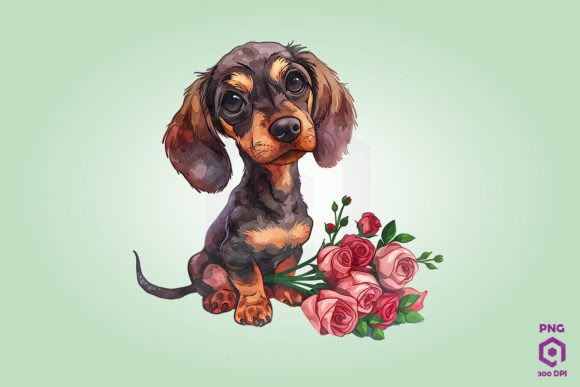
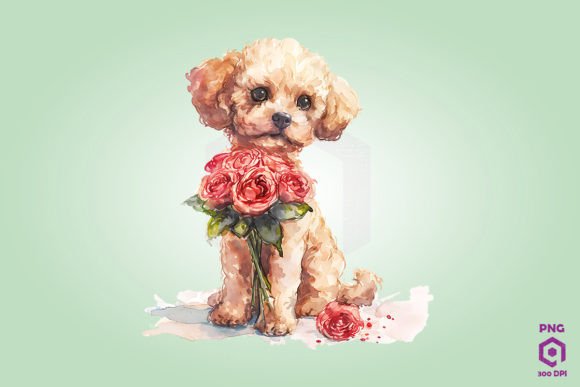
The visual personality of Poodle Giving Flowers leans heavily into whimsical and affectionate territory. In its original format as a sublimation file or clipart, the lines are likely crisp and the colors vibrant. For us embroidery enthusiasts, the challenge lies in interpreting those smooth vector or raster lines into satin stitch borders and fill stitch bodies. The mood is soft and inviting, making it a natural fit for boutique branding where warmth and approachability are key. The layout appears balanced, with the poodle and the flowers creating a cohesive silhouette that should hold up well when scaled down for smaller items like patches or up for larger statement pieces like tote bags.
What stands out immediately is the potential for texture. Poodles are defined by their curly coats, which offers a fantastic opportunity to play with stitch direction and density. If digitized correctly, this area could feature varied angles to mimic fur, adding a tactile dimension that flat printing cannot achieve. The flowers being offered add a pop of color and a focal point that draws the eye, ensuring the design isn't just a blob of thread but a clear narrative image.
Real-World Application: The Custom Tote Scenario
To truly test the viability of this design, I imagined a specific real-life scenario: a custom order for a local boutique needing a run of personalized tote bags for a spring market. The client wanted something that felt handmade yet professional. Poodle Giving Flowers seemed perfect for this handmade product. On a canvas tote, the structure of the fabric provides a stable base, allowing the stitches to sit high and proud without sinking in.
In this context, the design serves as a strong seller. Customers at craft fairs often gravitate toward animal-themed items, especially when they involve breeds as popular as poodles. The addition of flowers elevates it from a standard dog portrait to a gift-ready item. Whether used for a personalized gift for a dog mom or as part of a broader small shop product line, the emotional connection is immediate. The finished product would likely appeal to buyers looking for unique custom apparel or accessories that stand out from mass-produced goods.
Navigating Fabric and Stitch Challenges
While the design shines on sturdy cotton canvases, caution is required when applying it to other materials. If you plan to use this on a stretchy sweatshirt for sweatshirt embroidery, the stability of the background becomes crucial. Poodle fur details, if rendered with very short satin stitches or dense fills, might pucker if the fabric shifts. Here, the choice of stabilizer is non-negotiable. A cut-away stabilizer would be my recommendation to ensure the finished product maintains its shape after multiple washes.
Textured fabrics present another hurdle. On a waffle knit or a heavy towel, fine details in the flower petals or the poodle's eyes might get lost. This is where understanding stitch density is vital. If the original digital embroidery file is too dense, it could cause the fabric to stiffen unpleasantly. Conversely, if it is too sparse, the backing might show through, especially on darker fabrics. Speaking of dark fabrics, this design likely relies on light thread colors for the poodle. Running a test on black or navy material is essential to see if a underlay stitch is sufficient to prevent the fabric color from muting the vibrancy of the threads.
Curved surfaces, such as caps, require careful hoop placement. The roundness of a cap can distort the proportions of the poodle's face or the arrangement of the flowers. For baby embroidery on onesies, the scale must be reduced significantly. At smaller sizes, tiny details like individual flower petals might need to be simplified or merged to prevent thread breaks and ensure clarity. An embroidered patch might be a safer bet for complex applications, allowing you to stitch the design on a stable backing before attaching it to the final garment.
Enhancing Brand Value and Customer Trust
For Etsy sellers and creative entrepreneurs, the quality of your design assets directly impacts buyer engagement. Using a well-executed version of Poodle Giving Flowers signals professionalism. It shows that you care about the intricacies of your craft, from thread selection to final presentation. A clean, crisp stitch job builds customer trust, encouraging repeat business and positive reviews. In the competitive world of commercial embroidery, distinctiveness matters. This design offers a niche appeal that can help a brand carve out a specific audience—those who love dogs and appreciate thoughtful, artistic gestures.
Furthermore, the versatility of the theme allows for seasonal pivots. While naturally suited for Valentine's holiday embroidery, the "giving flowers" aspect works year-round for birthdays, Mother's Day, or even sympathy gifts. This flexibility increases the return on investment for the design asset, making it a valuable addition to any library of design assets.
Practical Notes for the Studio
Before committing to a full production run, there are several steps every responsible designer should take. First, always test the design on scrap fabric that matches your final material. This reveals issues with tension, density, and registration that aren't visible on a screen. Check the thread colors against your palette; sometimes a digital RGB blue translates poorly to a physical rayon or polyester thread, requiring a manual adjustment.
Review the stitch types used in the digitization. Are the flowers utilizing running stitch for delicate outlines or fill stitches for volume? Ensure that the transition between the poodle and the flowers is smooth, with no unnecessary jumps or trims that could weaken the structure. If you are selling the finished items, confirm the licensing terms of the original Illustrations or Graphics. Since the source is described as a PNG bundle, you may need to have it professionally digitized into an embroidery file format compatible with your machine, unless a pre-digitized version is included.
Finally, consider the end-user experience. Will this tote bag design or apron withstand frequent washing? Will the threads fray? These practical considerations separate hobbyist attempts from professional-grade merchandise. By treating Poodle Giving Flowers with the respect and scrutiny it deserves, you ensure that the final result is not just a stitched image, but a cherished keepsake.